
Fighting Illegal Construction and Demolition Dumps
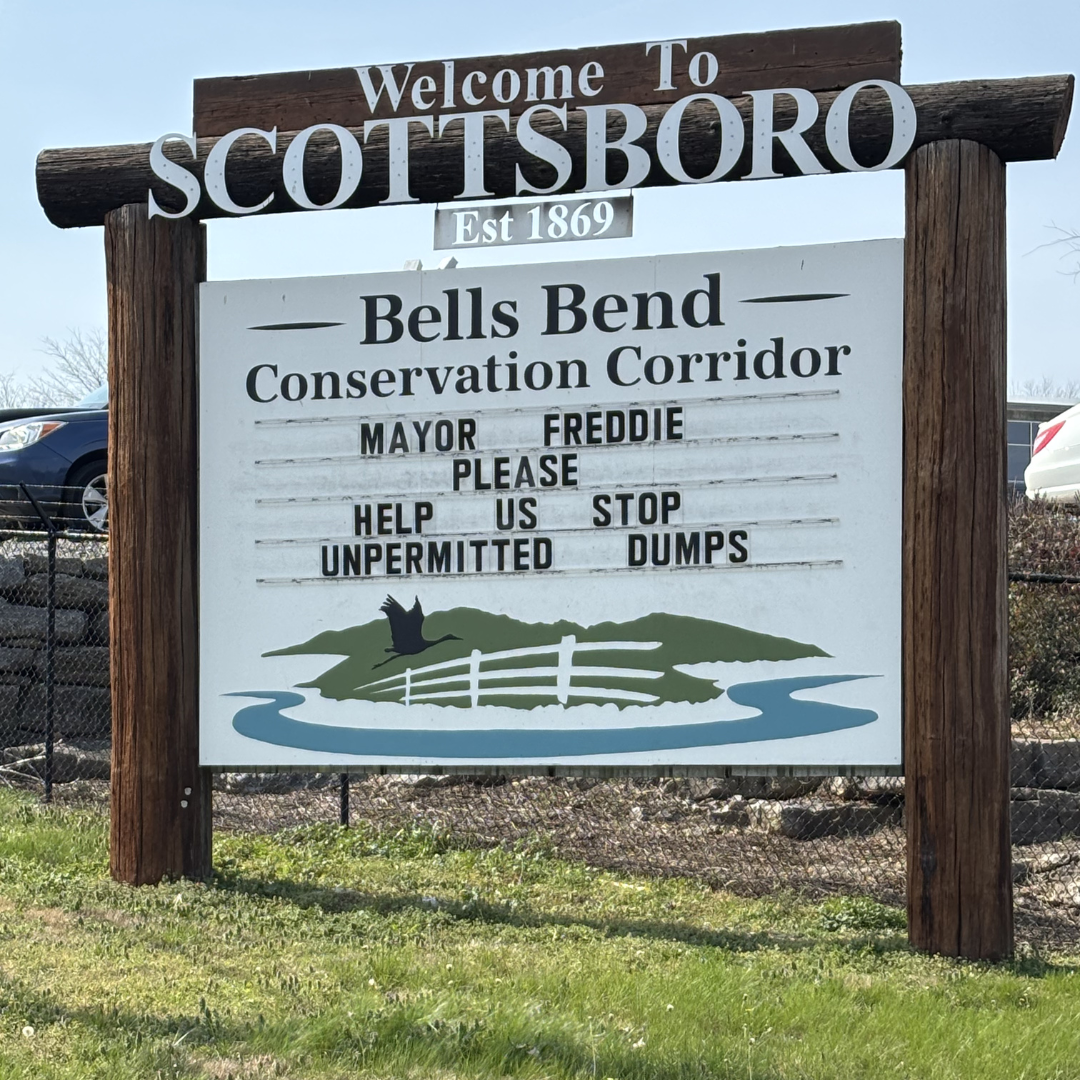
Tennessee Riverkeeper continues to investigate and build cases against a growing number of illegal construction and demolition dumps in Nashville. Our organization has filed federal lawsuits against two, and subsequently a Stop Work Order was issued by the city against one of those based on our court ruling. The state is doing nothing about the waste being dumped or the mud flowing out, and the city is doing very little (just the one Stop Work Order so far). The rather contrived excuse for not enforcing against the violators is that the city and state claim that dumping of waste dirt and rock from construction and demolition (C&D) sites is exempt, despite rules of both the city and state defining C&D waste as specifically including such:
"Demolition and construction waste includes, without limitation...soil, rock..."
The city of Nashville also claims that these sites are exempt from regulation if they claim to be conducting "agriculture". However, none of these dump sites are conducting any form of agriculture, and the city's rules have no such exemption for landfilling C&D waste. City rules do have a very limited exemption from the requirement to obtain a grading permit - often intentionally confused with a landfill permit - for small projects, including agriculture, that meet criteria such as: less than 5 feet in depth, less than 100 cubic yards, no sediment on adjacent land or streams, and less that 0.23 acre. All of the dumps we are working on far exceed the restrictions.
Our team is now expanding our efforts with more lab testing, help from neighbors, and some signs of support from a couple of city council members. We also continue to educate citizens, organize communities, and keep a spotlight on this issue through social media and news coverage. A well-attended community meeting was held on Sunday March 15, 2026 to hear from impacted and concerned citizens, inform them of our efforts and applicable regulations, and plan for expanded effort.